DAILYSHFE AL0 ¥24,230 0.90%LME 3M $3,490 3.90%FBX CN→US $3,607/FEU 0.00%
No paid rankingsNo affiliatesMethodology →
Aluminum DispatchIndependent B2B intelligence
Industrial profiles

Industrial Aluminum Profiles from China — T-Slot, Heat Sink, Structural & Solar

Screen SAMR-registered Chinese mills for industrial aluminum profiles: T-slot framing systems, heat-sink extrusions, solar-mounting rails, busbar sections and custom structural profiles in 6061-T6 / 6063-T5 / 6005A. The hard part is matching your sub-type to a mill that actually runs that production line — not just a generic extrusion catalogue.

Request a quote →

Screen China industrial aluminum profile suppliers

138 suppliers cross-checked against SAMR registry records — the 18 with the most complete evidence are below.

How this data is sourced →

Independent supplier intelligence — no paid rankings, no affiliate links. Mill identity is cross-checked against the SAMR business registry where captured. Factory/trading inference is a screening signal from public records, not an audited certificate.
What are you sourcing?
Filters
Showing 18 of 138 matched suppliers · page 7/7

Henan Huayang Aluminum

Gongyi, Henan · Est. 2016 · 10 yrs
Registered capital
¥35M
Standards
Export signal
Capacity
Public-list checks (OFAC · UFLPA): no match
View evidence

Jiangxi Jinrong Aluminum

Anyi, Jiangxi · Est. 2009 · 17 yrs
Anodized Profile — product evidence
Anodized Profile
Registered capital
¥8M
Standards
Export signal
Capacity
Public-list checks (OFAC · UFLPA): no match
View evidence

Nanchang Yangshi Aluminum

Nanchang, Jiangxi · Est. 2019 · 7 yrs
Registered capital
¥14M
Standards
Export signal
Capacity
Public-list checks (OFAC · UFLPA): no match
View evidence

Qiyang Hongtai Aluminum

Qiyang, Hunan · Est. 2003 · 23 yrs
Registered capital
¥5M
Standards
Export signal
Capacity
Public-list checks (OFAC · UFLPA): no match
View evidence

Shaanxi Gaoke Aluminum

Xi'an, Shaanxi · Est. 2012 · 14 yrs
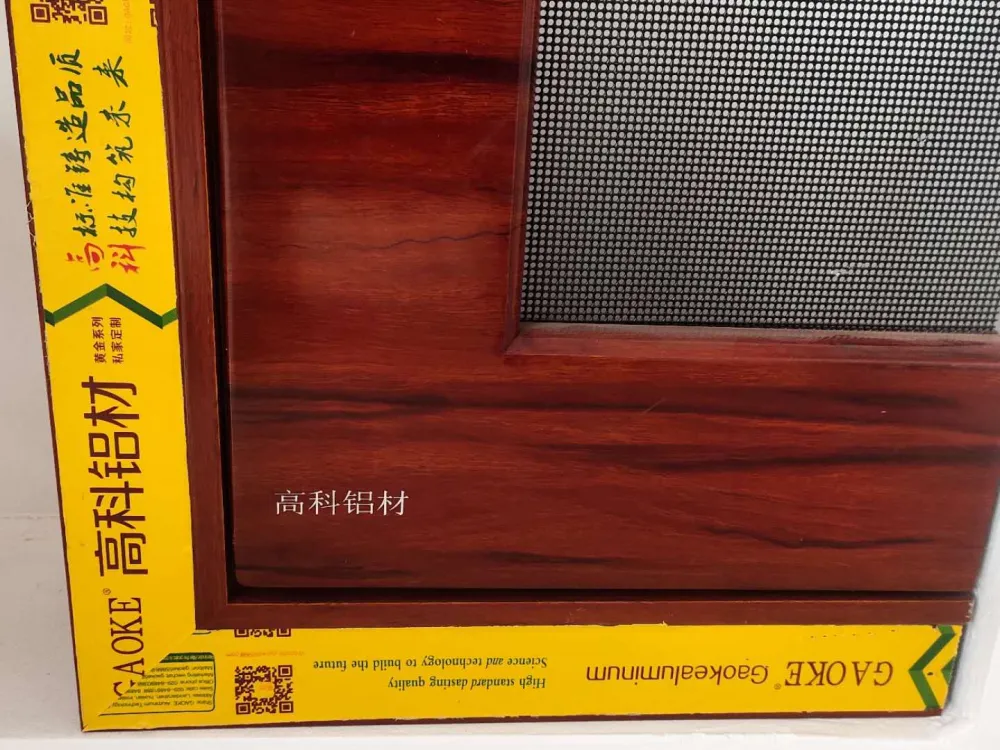
125 Seamless Welding — product evidence
125 Seamless Welding
Registered capital
¥10M
Standards
Export signal
Capacity
Public-list checks (OFAC · UFLPA): no match
View evidence

Shandong Xinchang Aluminum

Linqu, Shandong · Est. 2006 · 20 yrs
Industrial Aluminum Profile (3) — product evidence
Industrial Aluminum Profile (3)
Registered capital
¥10M
Standards
Export signal
Capacity
Public-list checks (OFAC · UFLPA): no match
View evidence

Shandong Yuyang Aluminum Group

Binzhou, Shandong · Est. 2004 · 22 yrs
Registered capital
¥100M
Standards
Export signal
Capacity
Public-list checks (OFAC · UFLPA): no match
View evidence

Wuxi Jinyang Aluminum

Wuxi, Jiangsu · Est. 2003 · 23 yrs
Aluminum Channel Bar — product evidence
Aluminum Channel Bar
Registered capital
¥10M
Standards
Export signal
Capacity
20K t/yr self-published
Public-list checks (OFAC · UFLPA): no match
View evidence

Jiangmen Global Aluminum

Jiangmen, Guangdong · Est. 2006 · 20 yrs
Registered capital
¥72M
Standards
Export signal
Capacity
Public-list checks (OFAC · UFLPA): no match
View evidence

Jiangsu Maidi Aluminum Group

Suzhou, Jiangsu · Est. 2015 · 11 yrs
Registered capital
¥10M
Standards
Export signal
Capacity
Public-list checks (OFAC · UFLPA): no match
View evidence

Jiangxi Nanya Aluminum

Anyi, Jiangxi · Est. 2009 · 17 yrs
Registered capital
¥10M
Standards
Export signal
Capacity
80K t/yr self-published
Public-list checks (OFAC · UFLPA): no match
View evidence

Shandong Huanghe Aluminum

Jinan, Shandong · Est. 2019 · 7 yrs
Aluminum Alloy Solar PV Mounting Bracket — product evidence
Aluminum Alloy Solar PV Mounting Bracket
Registered capital
¥5M
Standards
Export signal
Capacity
Public-list checks (OFAC · UFLPA): no match
View evidence

Shaoxing Tianchen Aluminum

Shaoxing, Zhejiang · Est. 2014 · 12 yrs
Registered capital
¥15M
Standards
Export signal
Capacity
Public-list checks (OFAC · UFLPA): no match
View evidence
This page is for

Buyers sourcing T-slot framing, heat-sink, solar-mounting, busbar or custom structural extrusions from Chinese mills.

Not for

Buyers needing architectural window/facade profiles, or a US 80/20-brand catalogue match without a drawing.

Prepare for your RFQ
  • Sub-type (T-slot series / heat-sink / structural …)
  • Alloy & temper (6061-T6 / 6063-T5 / 6005A)
  • Cross-section drawing (DXF/PDF) + tolerances
  • Machining (cut / drill / tap / CNC)
  • Finish (mill / anodize class / hard anodize)
  • Quantity & destination
Origin hubs
Guangdong · Shandong · Zhejiang
China industrial extrusion clusters
Structural alloy
6061-T6
machined & load-bearing sections
Standards
GB/T 5237 · ASTM B221 · EN 755
extrusion spec & tolerances
Identity
SAMR / USCC
checked in public registry
Choosing a supplier

How to choose an industrial aluminum profile supplier in China

  1. 01

    Match the mill to your profile family — not just 'extrusion'

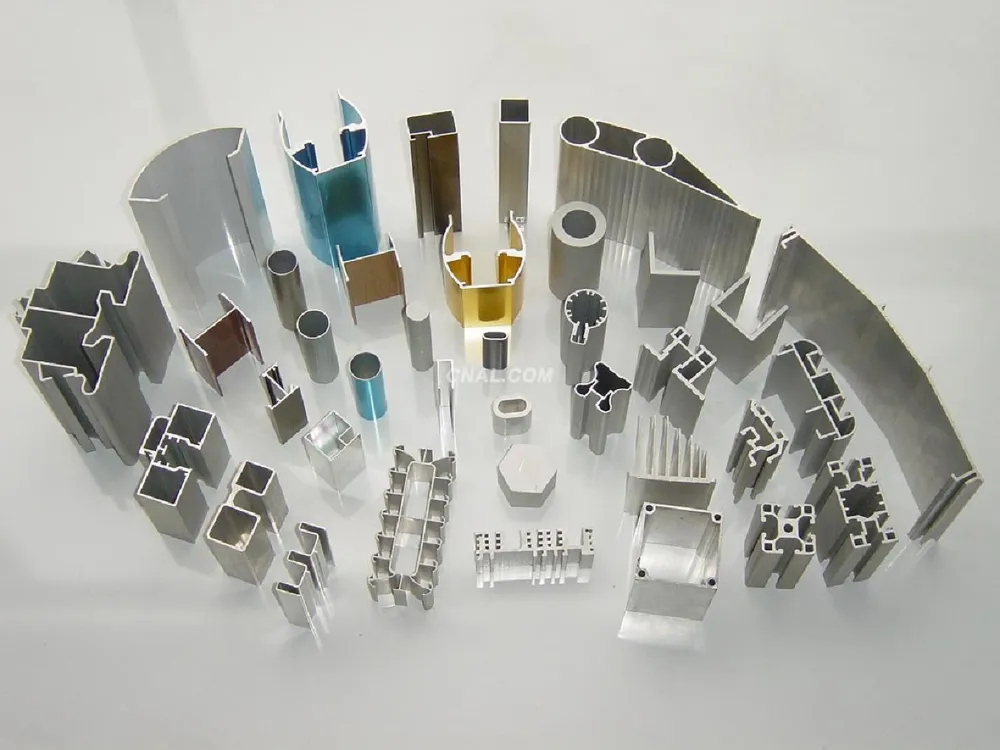
    A window-profile mill, a heat-sink specialist and a T-slot framing extruder run very different die designs, press configurations and quality checks. Check the supplier's official-site product records for examples in your specific category — multi-void heat-sink fins, T-slot series sections, solar channel shapes — rather than accepting a generic 'industrial aluminum profile' claim. Ask for a same-family reference sample or die drawing before quoting.

  2. 02

    Verify T-slot series dimensions before you commit

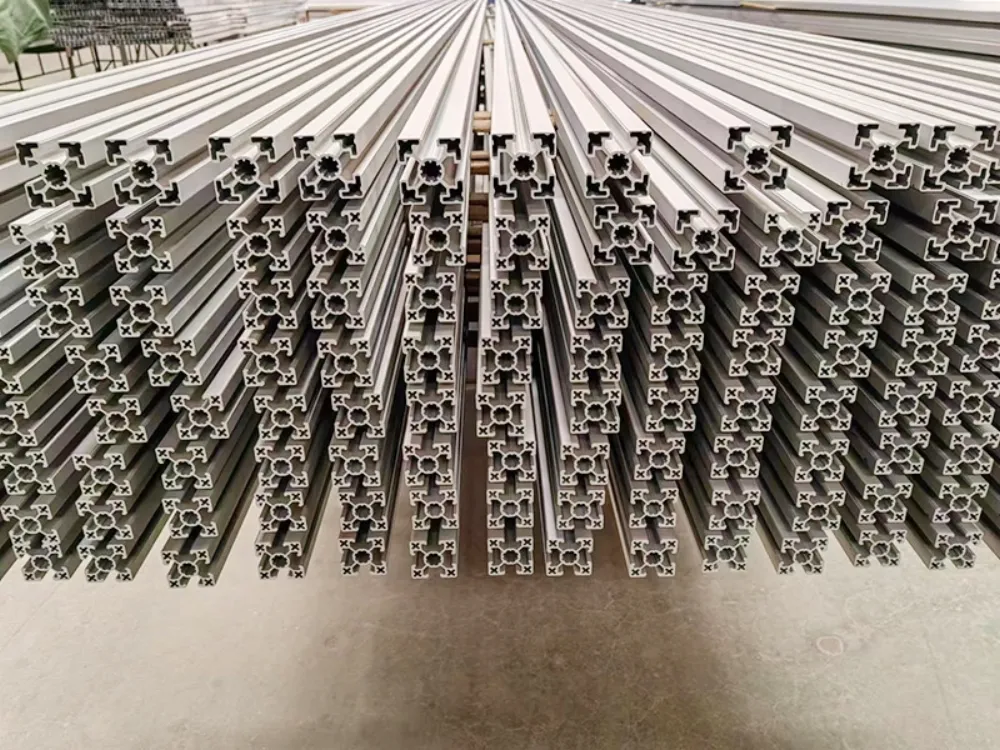
    T-slot profiles are dimensioned by slot width and nut-track depth, commonly grouped into 20-, 30-, 40- and 45-series. Chinese mills can produce dimensionally compatible profiles, but exact slot width, nut-track depth and centering-hole diameter must be confirmed against your hardware. A mis-dimensioned nut groove makes the frame incompatible with your fasteners — request a dimensional drawing and a physical first-article sample, not just a catalogue image.

  3. 03

    Specify alloy, temper and tolerance in writing — not just the alloy number

    For structural and machined parts, temper matters as much as alloy. 6061-T6 (solution heat-treated and artificially aged) has substantially higher strength than 6061-T4 or 6061-O. Name the required temper, dimensional tolerances, flatness and any critical fit dimensions in your RFQ, and require a lot-specific mill test certificate (MTC) confirming actual mechanical properties — not a generic alloy data sheet.

  4. 04

    Confirm die and post-processing capability in-house vs. outsourced

    Heat-sink profiles with narrow, deep fins require precision die inserts and controlled extrusion speed; not every mill that extrudes general sections can hold these tolerances. Ask whether the mill operates its own die shop, and confirm separately whether CNC cutting, drilling, tapping or anodizing is in-house — each outsourced step adds lead time and reduces visibility into quality control.

Sourcing risk

Industrial profile sourcing risks (and how to mitigate them)

Common failure modes when sourcing industrial aluminum profiles from China. General buyer checks based on industry practice — not a claim about any specific supplier.

Receiving wrong temper — e.g. 6061-T4 when 6061-T6 was specified

Mitigation: Name the exact alloy and temper in the PO and require a lot-specific mill test certificate confirming tensile strength, yield strength and elongation. Do not accept a certificate from a different lot, a generic data sheet, or a stock test report not tied to your run.

T-slot dimensional mismatch rendering frames incompatible with hardware

Mitigation: Supply a dimensioned reference drawing and a physical fastener/nut sample; request first-article inspection of slot width, nut-track depth and centering-hole diameter before approving mass production. Build a first-article approval step into your schedule.

Heat-sink thermal performance not tested or validated

Mitigation: Specify minimum fin pitch, fin height, base thickness and surface finish in the RFQ. If a thermal-resistance rating is a design input, request test data or commission a third-party thermal test before committing — a profile that looks correct dimensionally can still miss a thermal spec.

Anodize applied by uncontrolled subcontractor, coating thickness not verified

Mitigation: Confirm whether anodizing is in-house or subcontracted. Specify the coating class and thickness, require eddy-current or cross-section evidence, and keep a sealed reference sample to check repeat orders against.

Die cost and lead time not fixed before tooling is ordered

Mitigation: Get a written die quotation covering tooling cost, ownership terms, die storage and estimated lead time before paying a deposit. Custom die lead time varies by complexity — confirm per order; do not base your schedule on an unconfirmed verbal estimate.

Price signal

Is the price right? Check before you commit

Benchmark a quote against today's mill price, then estimate the all-in landed cost to your port before you negotiate. A workable price is a pre-condition for an RFQ — not an afterthought.

Today's aluminum price →Landed-cost estimator →
Product fit

Matching the right mill

You already know the product — use these to confirm a shortlisted mill can actually make what your project needs.

Which alloy is right for industrial aluminum profiles?

Use case drives the choice. 6061-T6 is the standard for structural members, machined brackets and load-bearing frames — higher strength, good machinability, weldable. 6063-T5 is preferred where complex cross-section extrudability, surface finish or anodizing quality matters more than raw strength. 6005A is a middle-ground structural alloy for floor sections and ladder profiles. Confirm alloy and temper with the mill per application.

Can Chinese mills produce T-slot-compatible profiles?

Many can. But compatibility with a specific T-slot hardware series is not automatic — slot width, nut-track depth and centering-hole diameter must match your fastener system. Request a dimensional drawing and compare it to your hardware spec before approving production; a physical first-article sample is the reliable check.

What should I include in an RFQ for a custom industrial profile?

At minimum: a dimensioned cross-section drawing (DXF or PDF), alloy and temper (e.g. 6061-T6), tolerances on critical dimensions, cut length and length tolerance, surface finish (mill / anodized class / hard anodize), any machining (holes, threads, CNC cuts), estimated annual volume and packaging/labelling. A complete drawing makes quotes comparable and limits spec drift.

What is the difference between standard anodize and hard anodize?

Standard anodize provides corrosion resistance and cosmetic consistency for exposed assemblies. Hard anodize is a much heavier, harder, more wear-resistant coating — appropriate for sliding guide rails, fixture plates and wear-exposed components. Specify the type and coating thickness in your RFQ; the two are produced on different process lines.

Applications

What these profiles are used for

T-slot framing systems (automation workstations, machine enclosures, modular frames)Heat-sink extrusions (electronics cooling, LED, power-supply housings)Solar-mounting rail and channel sectionsMachine-guard frames and perimeter enclosure profilesConveyor and automation frame membersBusbar and electrical distribution profilesStructural members for industrial equipment and platformsCustom machined sections (guide rails, brackets, fixture plates)

For sourcing: match the application to a mill's actual production line — a window-profile specialist isn't automatically a curtain-wall fabricator. Confirm the mill has produced your specific product type before.

Alloys & temper

Common alloys

6061-T6Structural and machined parts — high strength, good machinability, weldable; the workhorse for load-bearing sections
6063-T5General industrial sections and T-slot framing — excellent extrudability and anodize surface; lower strength than 6061-T6
6005A-T5Structural extrusions needing both extrudability and strength — common for floor sections, ladder rails and engineering shapes
7075-T6High-load applications — very high strength, limited extrudability for complex sections; confirm die capability and mill availability before specifying

For sourcing: ask for the mill test certificate (chemical composition + temper) for the exact alloy — a spec sheet alone isn't proof. Re-melt-heavy mills can drift out of spec batch to batch.

Surface finishes

Finishes

Mill finish

No surface treatment; for hidden, post-machined or downstream-coated profiles

Standard anodize

Corrosion resistance and consistent cosmetics for exposed assemblies — confirm coating class and thickness in RFQ

Hard anodize

Heavy, wear-resistant anodize for sliding, fixture and wear-exposed components — produced on a dedicated line

Powder-coat

RAL colour range; common for machine-guard frames, equipment housings and colour-coded assemblies

For sourcing: finishing (anodizing, PVDF, powder-coat) is often outsourced. Confirm whether the mill coats in-house and to which film/coating-thickness standard — it drives both warranty and weathering performance.

Applicable standards

Governing standards

Industry-applicable standards that govern this product type — not a certification claim for any individual mill.

GB/T 5237
Chinese national standard family for extruded aluminium profiles — alloy, temper, dimensional tolerance and surface treatment (issued by SAC, China's standards body)
EN 755
European standard family for extruded aluminium rod, bar, tube and profiles — dimensional tolerances and mechanical properties by alloy and temper
ASTM B221
US specification for aluminium-alloy extruded bars, rods, profiles and tubes — often referenced in international RFQs for mechanical and dimensional requirements

For sourcing: request a project-specific test report against these standards — not a generic certificate. A standard that governs the product type is not proof a given mill's output was tested to it.

Sourcing from China

Why source industrial aluminum profiles from China

Chinese mills supply a large and diverse range of industrial aluminum extrusions — T-slot framing, heat-sink fins, solar-mounting channel, busbar profiles, machine-guard sections and custom structural members — in 6061-T6, 6063-T5, 6005A and other alloys, with in-house or sub-contracted anodizing, CNC cutting and drilling. The supply challenge is not finding a catalogue entry: it is determining whether the mill actually runs the production line your profile type requires. A heat-sink specialist with a multi-void die capability is not interchangeable with a window-profile extruder, and neither is qualified for T-slot series framing without the right tooling and dimensional discipline. Sourcing from a SAMR-registered mill rather than a trading layer gives you a verifiable identity, lot-specific mill test certificates and the ability to submit a technical drawing for die quotation. Use the supplier evidence results to compare mills and send one structured RFQ.

FAQ

Sourcing questions

Can Chinese mills match specific T-slot series such as 40-series or 45-series profiles?
Many produce profiles dimensionally compatible with European T-slot series. Compatibility is not guaranteed by series name alone — supply a dimensional drawing or specify the exact slot width, nut-track depth and centering-hole diameter, and request a first-article sample before approval. Treat 'compatible' as a claim to verify, not guaranteed interchangeability.
What standards govern industrial aluminum profiles from China?
GB/T 5237 is the Chinese national standard family for extruded aluminium profiles. International orders frequently reference ASTM B221 (US) or EN 755 (European) for mechanical and dimensional requirements. State which standard applies in the RFQ so the mill's inspection basis is unambiguous.
How do I distinguish a factory from a trading company in China?
Check the SAMR registered business scope: a genuine extrusion mill typically lists aluminium extrusion, die manufacturing and surface treatment; a trading company scope references sales or distribution. On this site, factory/trading inference is drawn from public SAMR records, official-site product evidence and export signals — a screening signal, not an on-site audit. Use it to prioritise outreach.
Can this page confirm MOQ, price or lead time?
No. MOQ, price, die cost and lead time vary by complexity, quantity, alloy, finish and mill capacity. Use the supplier evidence results to shortlist candidates, then confirm all open items — temper, tolerance, finish, machining, die ownership and volume — through a structured RFQ.
Are there anti-dumping duties on Chinese industrial aluminum extrusions?
Several markets — including the US and EU — have applied anti-dumping or countervailing duties on Chinese aluminium extrusions. Rates and scope vary by destination, HS code, product type and period — check the current rate for your HS code and country before costing your landed price.
What certifications can industrial profile mills provide?
Most established mills hold ISO 9001. For structural or safety-relevant applications, request a lot-specific mill test certificate (MTC) confirming alloy, temper, actual mechanical properties and dimensional compliance — not a generic data sheet. Sector certifications (IATF 16949 for automotive, AS9100 for aerospace) should be verified directly with the mill and treated as a claimed attribute until checked. We don't issue a 'verified' badge.
Sourcing

Get profile quotes from shortlisted mills

Send one RFQ; we review your request and can help arrange an introduction to SAMR-registered profile mills that match your alloy, finish and volume.

Request a quote →