Aluminum Extrusion Profiles — China Mill Sourcing Guide
Custom shapes, 6061 / 6063 / 6005A alloys, anodized + powder-coat finishes — inquiry-ready specs and a curated shortlist of Chinese mills with public official-site product evidence.
Three things to know before you write the inquiry
What is aluminum extrusion?
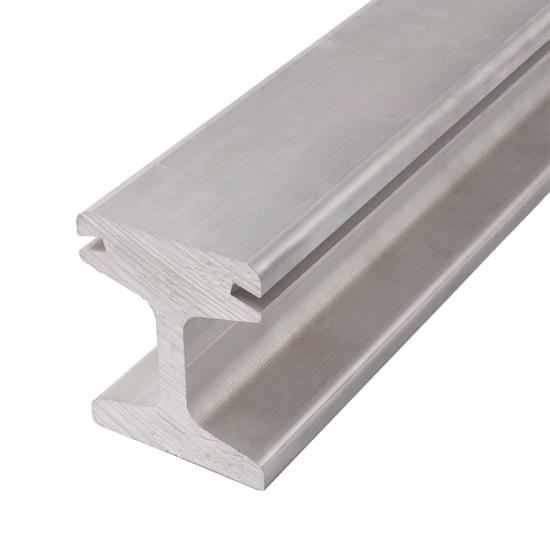
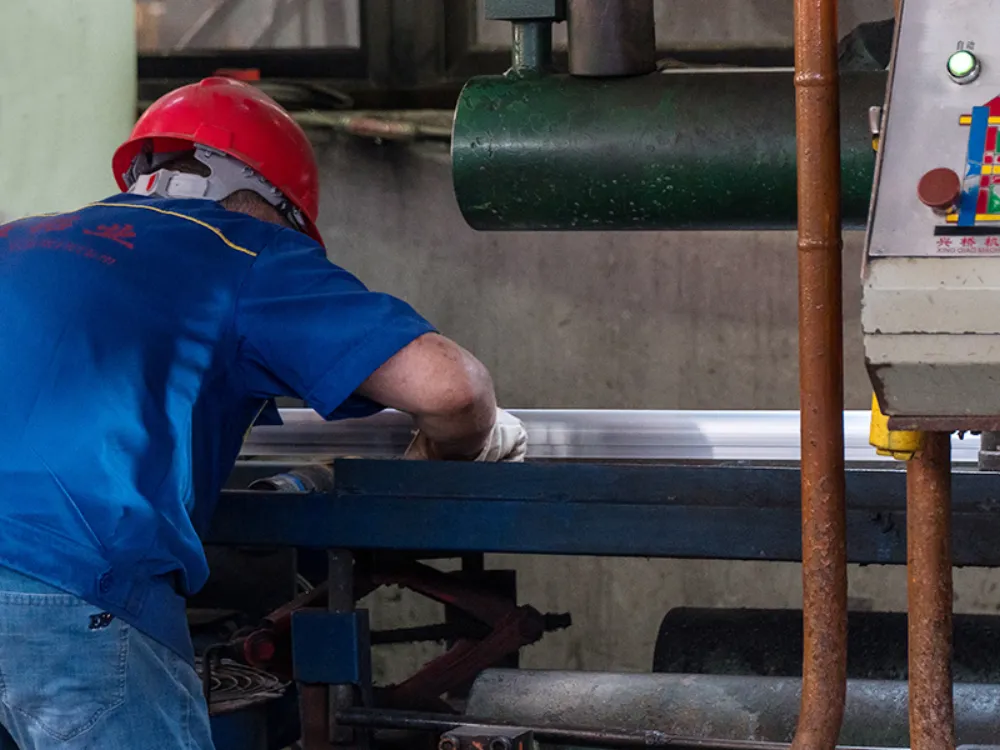
Aluminum extrusion is a forming process: a heated billet is pushed through a steel die under hydraulic pressure, producing a continuous profile with the die's cross-section. The result is a long bar — round tube, T-slot, channel, custom — cut to length and surface-treated. China holds the largest share of world extrusion capacity according to public IAI data, which is why most B2B buyers source extrusions there.
Profile vs extrusion vs shape — what's the difference?
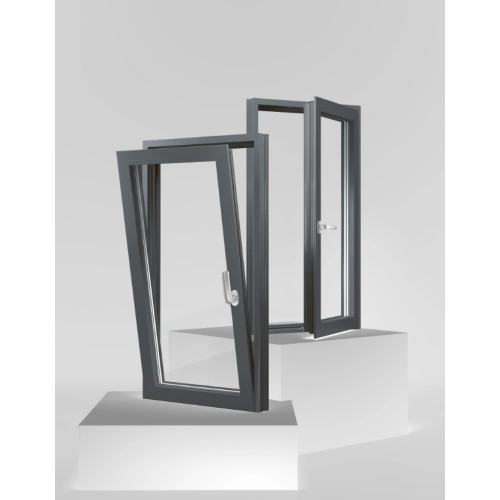
These terms are commonly interchanged. 'Extrusion' is the process. 'Profile' or 'shape' is what the process produces — the cross-section. A 'system profile' bundles related profiles into a window or curtain-wall family. When you write an inquiry, name the application and the cross-section you need; alloy, temper, and finish come after.
Why source extrusions from China?
Capacity, alloy range, and surface treatment depth. Chinese mills routinely run 6061 / 6063 / 6005A across the temper range, hold MTC and anodizing certifications, and ship in container-load volumes. Risk to manage: anti-dumping duties in destination markets, MOQ floors for custom dies, and surface-finish QC. Confirm specs and ADD/CVD treatment before placing orders.
Standard extrusion shapes — typical spec ranges
These ranges are indicative across Chinese mills with public catalogues. Use them to scope an inquiry; confirm the final spec range with the supplier for your alloy and die.
| Shape | Typical spec range | Common applications | Inquiry |
|---|---|---|---|
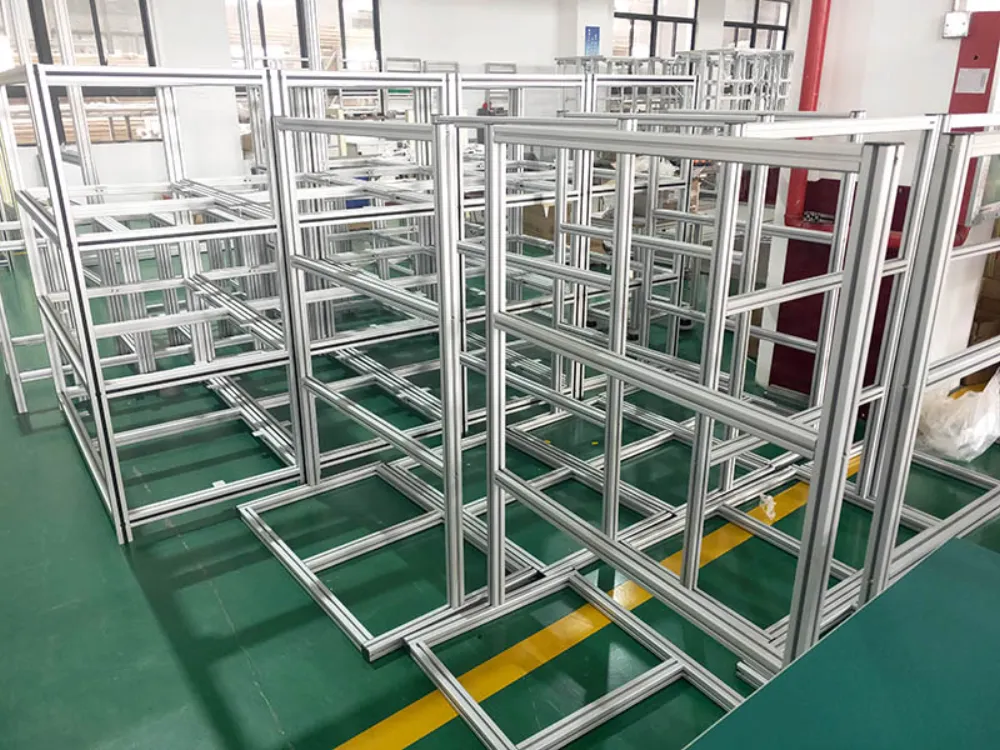
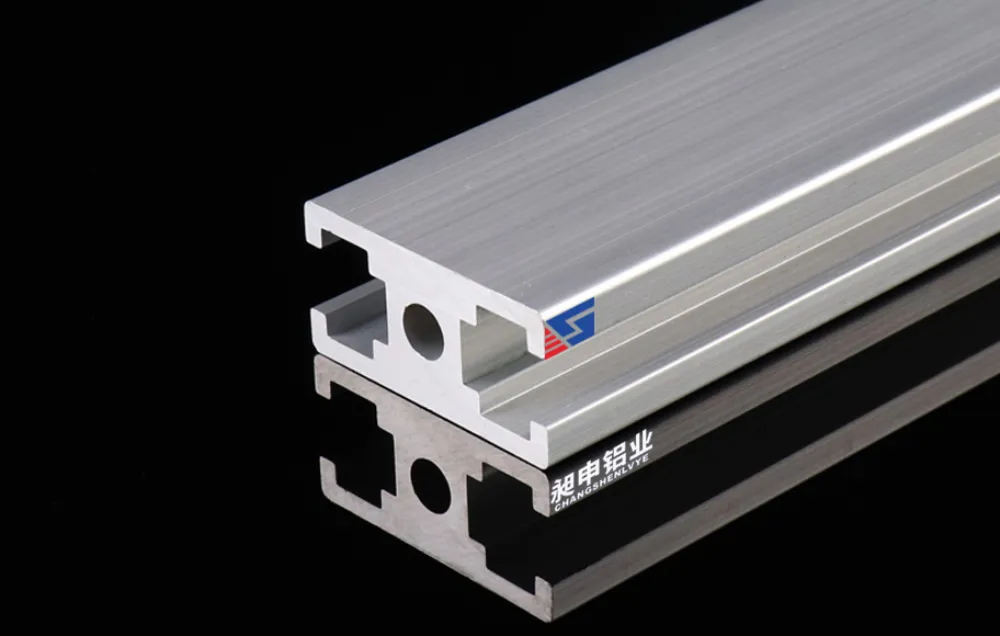
| T-slot profile | 20×20–80×80 mm typical | Industrial framing, machine guarding, assembly jigs | Prepare inquiry → |
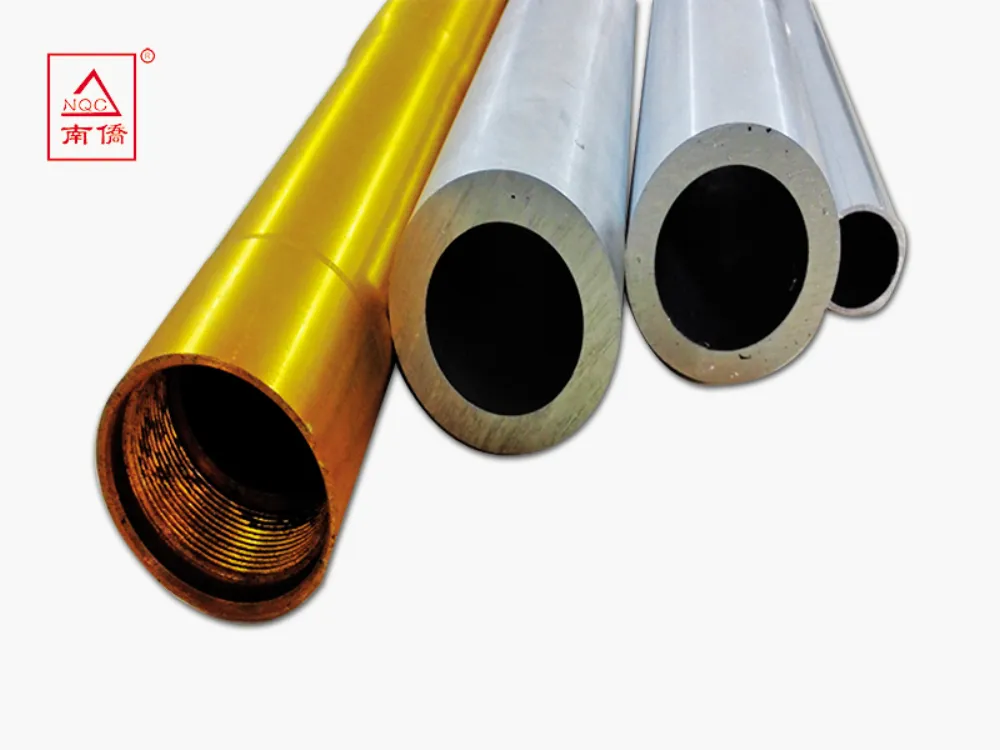
| Round tube | OD 6–200 mm, wall 1–10 mm typical | Railing, conduit, structural support, hydraulics | Prepare inquiry → |
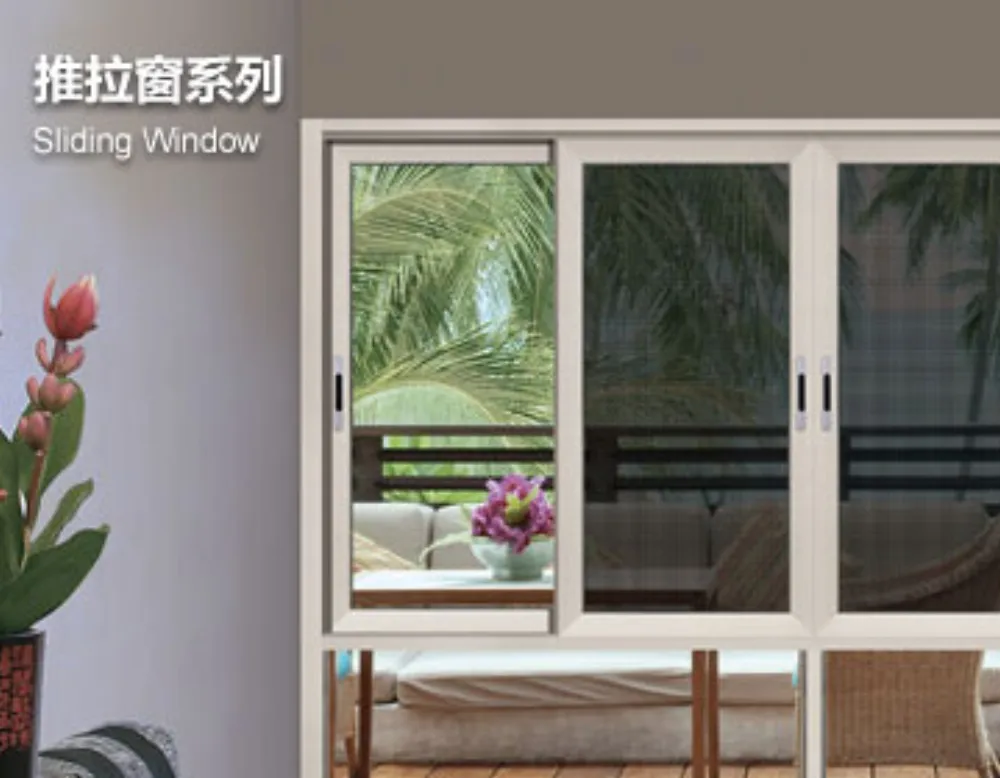
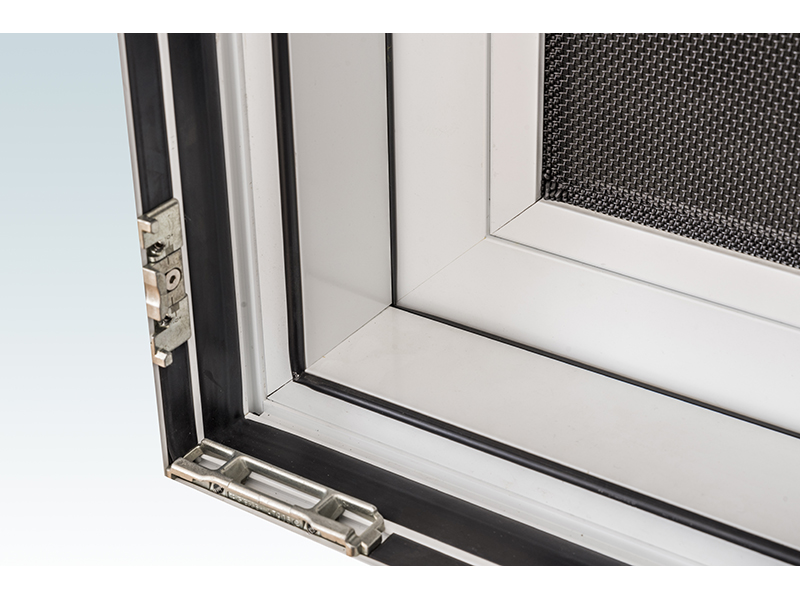
| Rectangular tube | 20×40–100×200 mm, wall 1.5–6 mm typical | Window/door frames, mullions, signage | Prepare inquiry → |
| Angle | Leg 10–100 mm, thickness 1.5–8 mm typical | Edging, brackets, structural reinforcement | Prepare inquiry → |
| Channel (U / C) | Web 15–120 mm, flange 10–60 mm typical | Glazing channels, slide tracks, frames | Prepare inquiry → |
| Flat bar | Width 10–300 mm, thickness 2–25 mm typical | Mounting strips, busbars, edge protection | Prepare inquiry → |
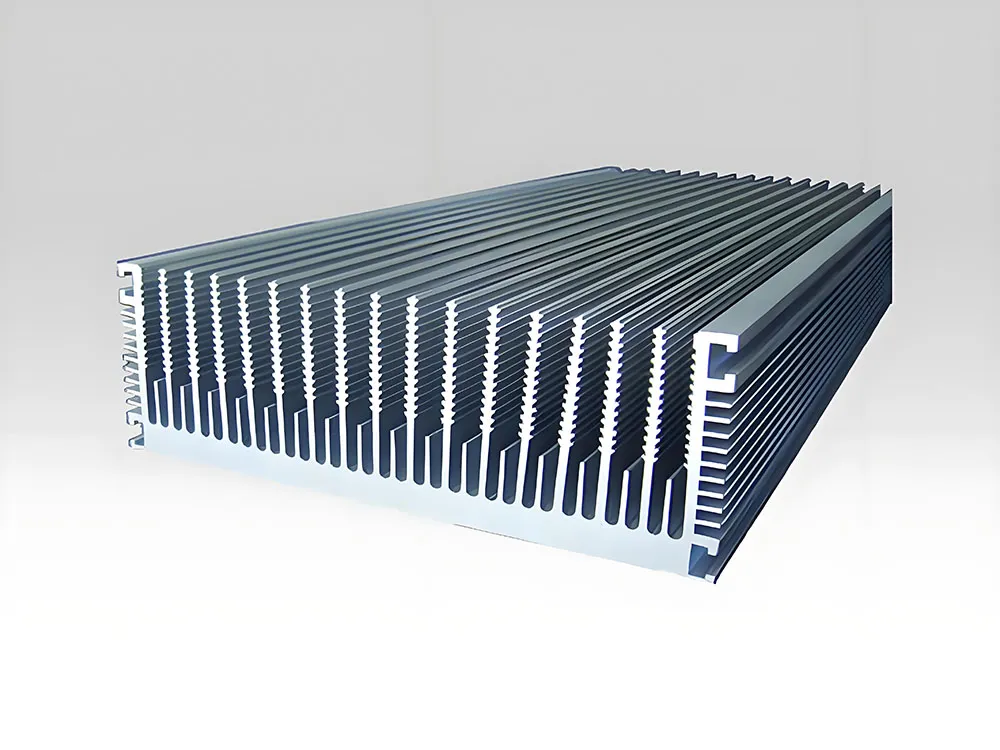
| Heat-sink profile | Fin density 1–4 mm pitch, base 3–10 mm typical | LED, power electronics, inverters, telecom | Prepare inquiry → |
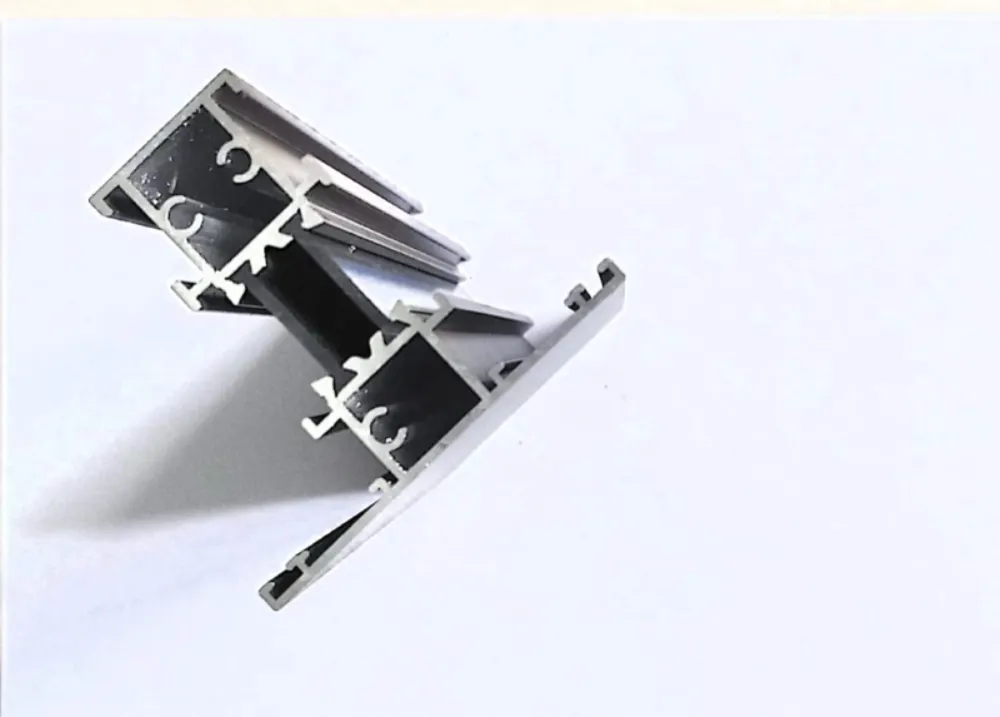
| Custom profile | Die-driven; circumscribing circle ≤ ~250 mm typical | Window/door systems, curtain-wall mullions, OEM | Prepare inquiry → |
Spec ranges are typical across mills with public product catalogues; individual mills publish tighter or wider envelopes. Confirm the achievable cross-section, tolerance, and length with the supplier before tooling.
6061-T6 / 6063-T5 / 6005A-T6 — when to pick which
Three alloy/temper combinations cover most aluminum extrusion sourcing decisions. Use this table to narrow the shortlist; then use the alloy picker for a guided decision based on your application.
| Alloy / Temper | Strength | Corrosion | Extrudability | Typical use |
|---|---|---|---|---|
| 6061-T6 | High — 276 MPa UTS typical | Good (lower than 6063) | Moderate (slower extrusion rate) | Structural framing, machined enclosures, marine |
| 6063-T5 | Moderate — 186 MPa UTS typical | Excellent (best of the three) | Excellent (fastest, finest finish) | Window / door profiles, architectural, anodized parts |
| 6005A-T6 | High — 260 MPa UTS typical | Very good | Good (between 6061 and 6063) | Truck chassis, solar racking, structural where weldability matters |
Mill finish, anodized, powder coat, PVDF, wood-grain
Mill finish
Extruded surface, no post-treatment. Lowest cost, used where surface isn't visible (industrial profiles, internal framing).
Anodized
Electrochemical oxide layer. Standard for architectural profiles; 6063-T5 takes anodizing best. Available in clear, champagne, bronze, black.
Powder coat
Thermoset polymer applied dry, baked. RAL-coded colour range, widely available across Chinese extruders, lower cost than PVDF.
PVDF coating
Higher-performance fluoropolymer paint. Required for exterior architectural use in many markets (curtain-wall facades). Confirm Kynar/Hylar resin spec with supplier.
Wood-grain transfer
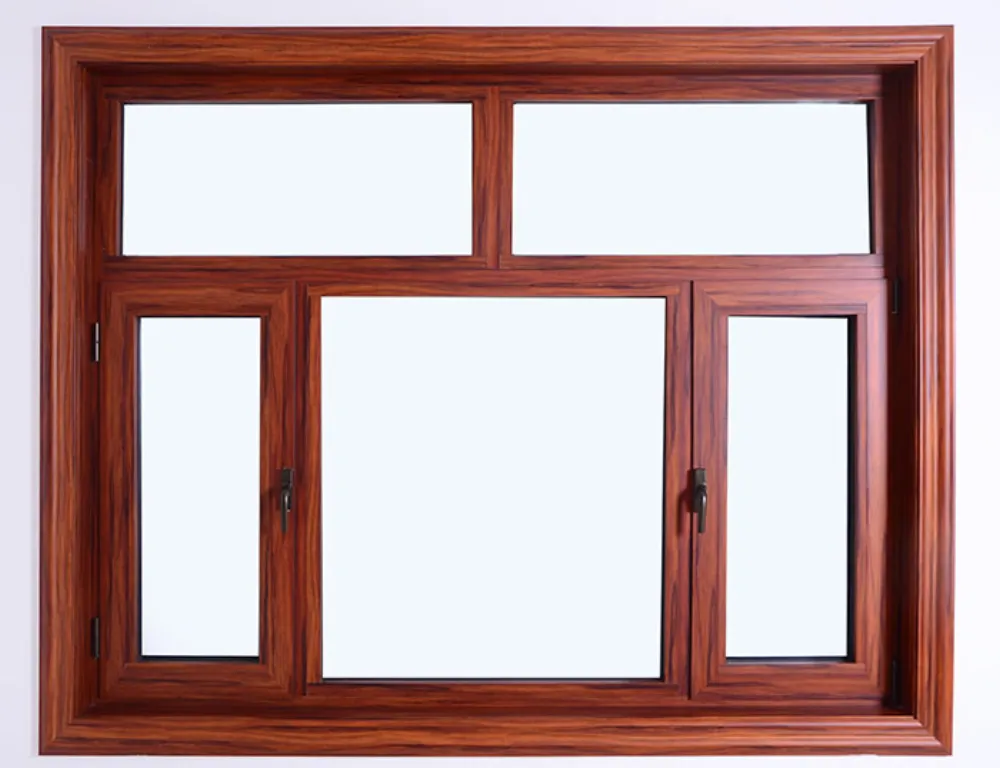
Heat-transfer film over powder coat or anodized base. Common in window/door profiles for residential and hospitality applications in Asian markets.
Open a die: cost, MOQ, lead time, process
Custom dies open up profile families that don't exist in standard catalogues. The figures below are indicative ranges across Chinese mills with public capability publications — they vary by die complexity, alloy, and mill.
Custom extrusion process — 4 steps
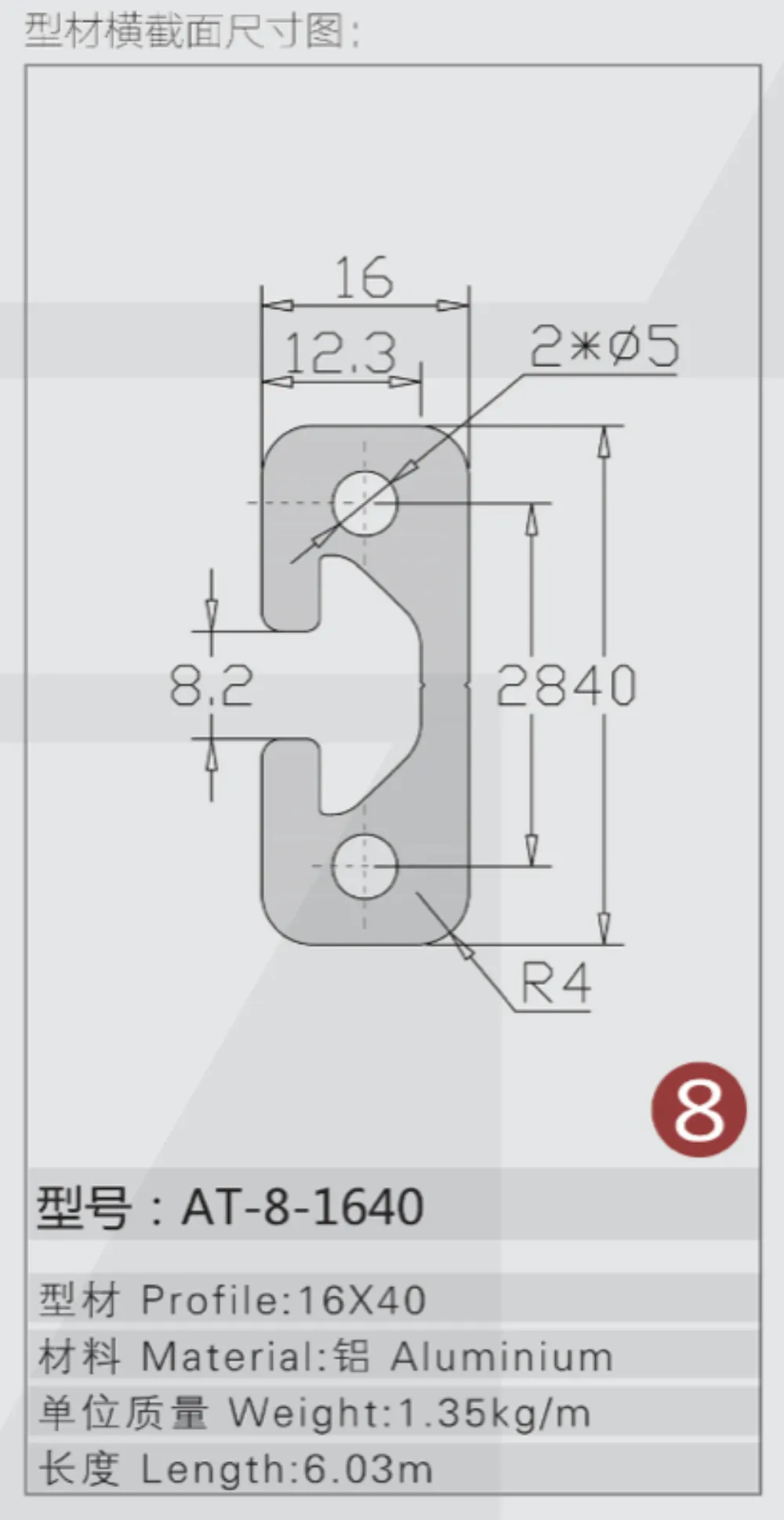
- Cross-section + die design: Share DWG / DXF or a scaled sketch. Mill engineers review for extrudability; circumscribing circle, wall ratio, and tongue/recess geometry drive feasibility.
- Die tooling + first-article trial: Die is cut, trialled, and sampled. Sample cross-section is dimensionally inspected — confirm before committing the production run.
- Production run + surface treatment: Extruded → aged to temper → cut to length → anodized / powder / PVDF as specified. Inspection records (MTC, dimensional report) follow the lot.
- Packaging + export documentation: Profile bundles wrapped, foam-lined or PVC-sleeved per agreement. Commercial invoice, packing list, MTC, COO, and any required certification ship with the container.
Die cost, MOQ, and lead time vary materially by mill, profile complexity, and surface treatment. Confirm with the supplier before placing an order.
From China FOB to your destination port
Extrusion pricing tracks LME / SHFE aluminum prices plus a mill conversion premium (USD/kg), then layers in ocean freight, anti-dumping (where applicable), MFN duty, VAT, and FX. The landed-cost calculator runs the full breakdown for a default 25 t / 6063 extrusion / Shanghai → HCMC CIF; adjust to your route, alloy, and incoterm.
Estimate landed cost →Chinese mills with public extrusion product evidence
SAMR-verified Chinese mills with official-site product evidence in this category. No paid placements.
Curated shortlist temporarily unavailable
Fewer than four curated mills currently meet the publication + identity gates. Browse the full supplier category pages instead — each listing there carries the same identity and product checks.
▸ About these listings
Listings reflect public official-site product evidence and SAMR registry data. We do not certify factory capability, audit production, or guarantee delivery. Confirm specs, MOQ, certifications, and lead time directly with each supplier.
Two supplier category indexes
Prepare a structured inquiry
Use this page to assemble the fields buyers commonly include before contacting suppliers — alloy, temper, profile shape, surface finish, MOQ, destination port, certifications. Phase 1 records inquiry intent only; we do not broker quotes between buyers and mills.
Open the inquiry form →Buyer playbooks for adjacent decisions
Common buyer questions
What's the minimum order quantity for an aluminum extrusion?
MOQ varies by mill and profile. For an in-catalogue standard profile, mills often quote per container (≈ 20–25 t). For a custom die, the typical floor is 500–1,000 kg per profile, set so the mill recovers the die tooling investment. Confirm the exact MOQ with the supplier — it tracks volume strategy more than capacity.
How much does a custom die cost?
Indicative range across Chinese mills with public capability data: USD 300–1,500 per die. Cost is driven by cross-section complexity, circumscribing circle, and number of cavities. Some mills offer to amortise the die fee into the unit price if the order volume justifies it; ask explicitly.
What's a typical lead time?
First production run after die approval: 4–8 weeks. Repeat runs against an existing die: 2–4 weeks. Surface treatment (PVDF or specialty anodizing) and certification add time. Ocean freight from Shanghai or Ningbo to HCMC / Santos / Long Beach adds another 2–6 weeks depending on route.
What certifications should I ask for?
Standard request set: Mill Test Certificate (chemistry + mechanical), ISO 9001 quality management, anodizing certification (e.g. Qualanod) for architectural profiles, and a Certificate of Origin if you're claiming preferential duty. For curtain-wall systems, ask about AAMA / EN 12020-2 / GB/T 5237 compliance per your market.
What payment terms are typical?
First-time orders are commonly 30% T/T deposit on PO, 70% T/T against B/L copy or LC at sight. Established relationships move toward 30/70 with longer credit. Avoid 100% prepay before sample approval; use LC if you can't confirm the mill via independent identity evidence.
Do mills send samples?
Most mills will cut a 0.3–1 m length sample of an in-catalogue profile, free or for a small fee plus freight. Custom-die samples come from the die trial run after tooling — confirm the trial sampling protocol in your PO.
Listings on this page are based on publicly available official-site product evidence and SAMR registry data. We do not certify factory capability, audit production, or guarantee delivery. Confirm specifications, MOQ, certifications, and lead time directly with each supplier before placing orders. Pricing and landed-cost figures are estimates based on public benchmarks (LME, SHFE, Changjiang, Freightos FBX, customs duty schedules) and are not binding.